
Atomic Effectiveness: Your Personal Habits Are the Real Driver of Organizational Profit in the Age of AI

In my years working with professionals across the UK, Nigeria, and beyond, one truth has become crystal clear: every professional is a person first. Behind the job title, the suit, laptop, or the targets is an individual with emotions, values, fears, and dreams.

Until we address that individual, real culture change, productivity, and profitability remain elusive, especially in the Age of AI.
I once sat with a veteran doctor in Berlin, one of the most respected in her field. She looked at me and said, “AI can take over many things, but it will never replace what a great doctor does. AI gives lightning-fast recommendations, but it cannot feel the patient’s vibe, sense the unspoken worry, or offer the human touch that builds trust.

The moment you try to force emotion and empathy into AI, the whole system breaks down. AI must stay in its lane. Humans must stay in theirs.” That conversation captures where we are and what our direction of travel as humans and professionals should be.
The AI Shift: Efficiency Is No Longer Enough
When Harry Truman suddenly became President of the United States in 1945, he had a clear personal agenda. He wanted to complete the economic and social reforms of Roosevelt’s New Deal, which had been postponed by World War II. But as soon as he asked himself one simple yet powerful question — “What needs to be done?” — the answer became obvious. Foreign affairs had absolute priority.
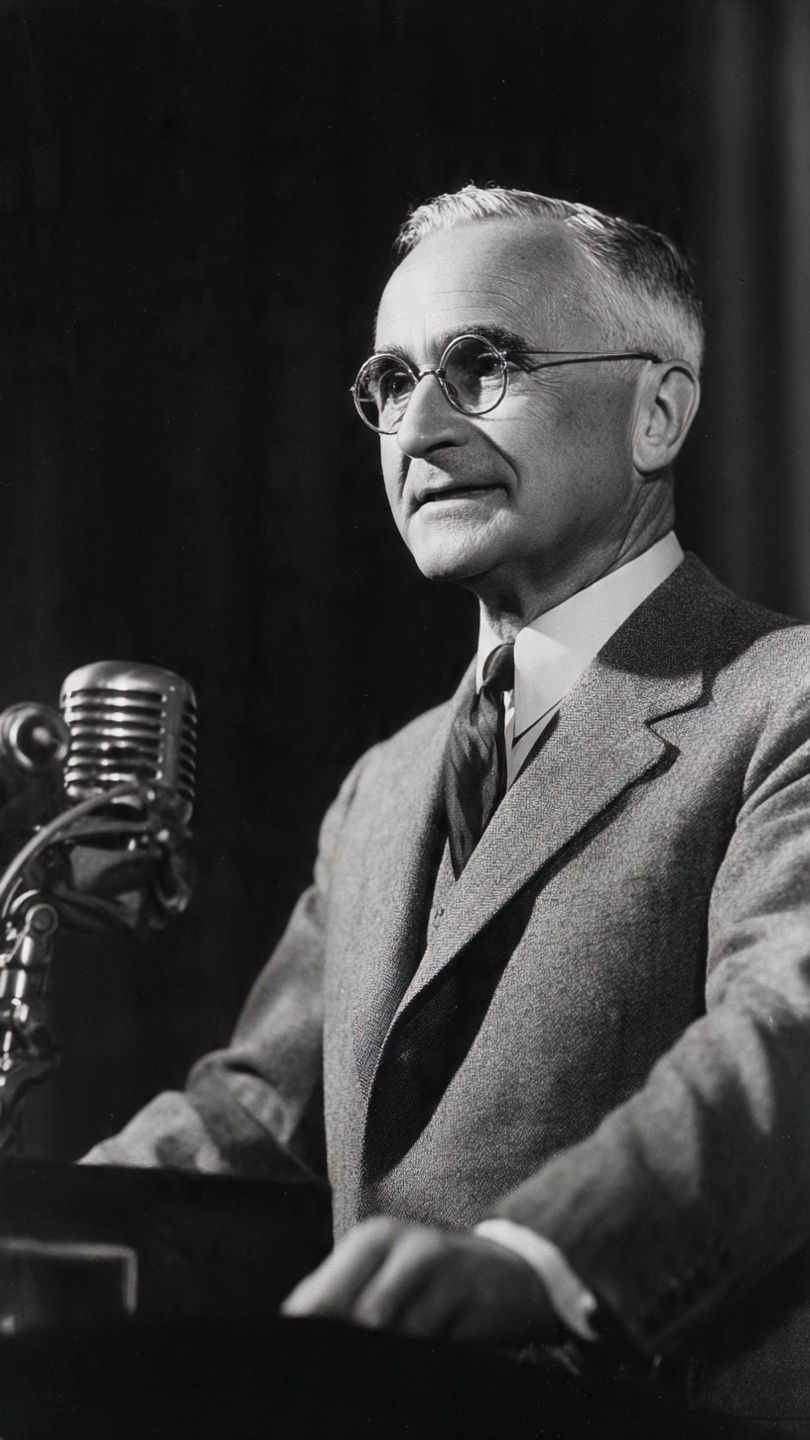
Truman immediately reorganised his entire working day around that reality. He started each morning with detailed briefings from the Secretaries of State for the Home Department and Defence. He disciplined himself to focus on what mattered most, even when it meant setting aside his own preferred domestic priorities.
That single act of effectiveness had historic consequences. Truman contained the spread of Communism in both Europe and Asia. Through the Marshall Plan, he helped trigger five decades of worldwide economic growth and stability.
As Drucker noted, Truman, a man with little charisma, became one of the most effective presidents in American history in foreign policy precisely because he asked the right question and acted on the answer.
Peter Drucker, widely regarded as the father of modern management, illustrated the power of effectiveness beautifully in his classic book The Effective Executive. Drucker’s core lesson remains as relevant today as it was then: efficiency is doing things right, while effectiveness is doing the right things.

AI has changed the game forever. It automates reports, analyzes risk in milliseconds, scores credit applications, drafts emails, and even suggests strategic moves. In banks and fintech companies, what once took teams days now happens in minutes.
But here’s the uncomfortable truth: technology has made efficiency abundant. What has become scarce, and therefore extremely valuable, is human effectiveness. In the AI era, machines now handle the “right” part at superhuman speed. The human job is to decide what is right- with wisdom, empathy, contextual judgment, and ethical clarity.
According to Deloitte’s 2026 State of AI in the Enterprise report, in financial services, 86% of AI adopters say AI will be very or critically important to their business success in the next two years. Yet many organisations still struggle to move from adoption to meaningful, scaled impact. The biggest barrier is rarely the technology itself; it’s culture, habits, and people-readiness

New strategies, digital transformation projects, and ambitious expansion goals still fail not because the tools are weak, but because the people are not ready. Resistance, poor communication, fear, and misaligned habits kill even the best AI initiatives.
We see this playing out vividly right now. Nigerian fintech leaders like LemFi are making bold moves, committing £100 million over five years and designating London as their Global Headquarters. Similar moves by Kuda, Moniepoint, Zenith Bank, and others are creating hundreds of new UK jobs while deepening UK-Nigeria ties under the Enhanced Trade and Investment Partnership.
These companies are not just expanding, they are blending Nigerian entrepreneurial agility with UK regulatory professionalism and global talent. Success will depend less on who has the most advanced AI tools and more on who builds the strongest human culture within their teams.
Inside-Out Leadership: Start with the Person

Stephen Covey was right: real change is inside-out. You cannot successfully lead or participate in organisational culture change until you first master the culture inside yourself.
Many professionals I meet want their organisation to become more innovative, agile, respectful, and results-driven. Yet when I ask, “What are you changing first?” the room often goes quiet.
This is the shift every new hire stepping into a bank or financial institution, every leader helping a fintech scale from Lagos to London, and every professional navigating hybrid, cross-border teams must make: From “They need to change the culture” → “I am the culture, starting today.”

Being proactive (Covey’s first habit) means focusing on your Circle of Influence — your attitude, your daily habits, your communication style — instead of blaming leadership, systems, or “the way things have always been done.”
A powerful outcome of this inside-out approach is psychological safety — the belief that you can speak up, share ideas, admit mistakes, or ask questions without fear of embarrassment, blame, or punishment.
Google’s landmark Project Aristotle (a multi-year study of hundreds of teams) found that psychological safety was, by far, the single most important factor in high-performing teams. More important than individual talent, clear goals, or even dependability.
Teams with high psychological safety are approximately 27% more likely to report higher performance, 50% more likely to retain top talent, and 76% more likely to engage in strong collaboration.
When leaders and team members address each other as whole people first (not just job titles or “resources”), psychological safety emerges naturally.
For example, imagine a cross-functional team at a fast-scaling fintech integrating its Nigerian roots with its new London headquarters. A junior analyst in Lagos notices the AI credit model seems to undervalue small businesses in rural Northern Nigeria because the training data missed local realities.
In a psychologically safe culture, she confidently raises her hand: “I’m concerned this might create unintended bias — here’s what I’ve seen on the ground.” The UK and Nigerian team members listen, explore the issue together, and refine the model. Innovation accelerates. Trust deepens. Culture actually changes.

In a low-safety environment, she stays silent. The bias remains. The product underperforms. And the company wonders why “the culture isn’t scaling with the business.”
Respectful communication is, therefore, not soft-skill fluff; it is the daily habit that builds psychological safety and makes every other change possible.
Atomic Habits: Small Changes, Massive Compounding
James Clear’s insight is powerful here: you do not rise to the level of your goals; you fall to the level of your systems.
In the Age of AI, small daily habits become superpowers because technology multiplies whatever you put into it. A 1% better habit in learning, reflection, or collaboration gets amplified dramatically when AI handles the heavy lifting.
Research on habit formation shows that consistent small actions compound powerfully over time, exactly the kind of edge that turns good professionals into culture shapers.
Practical Examples You Can Start Tomorrow:
Habitstack 15 minutes of deep reflection after reviewing AI-generated risk reports. Turn cold data into human insight about the customer behind the numbers.
Design your environment to protect focused “deep work” time instead of constant reactivity to Slack and email.
Replace “reply all” broadcasting with thoughtful, respectful one-on-one conversations that acknowledge the person behind the role, whether they are in London, Lagos, or remote.
The identity shift matters most: stop seeing yourself as “someone trying to survive AI and rapid expansion.” Start seeing yourself as “the kind of professional who thrives in it and shapes the culture.”
The Multiplier Effect: Person → Productivity → Profit
Here is the chain that actually moves the needle:
→ Personal Effectiveness (mastering yourself as a whole person)
→ Professional Productivity (consistent, high-quality contribution and collaboration)
→ Operational Profitability & Impact (sustainable results, successful change, and real organisational performance)
Drucker reinforced this multiplier effect throughout his work. He famously advised leaders to “put their best people on opportunities rather than on problems” and to practise “concentration” — doing one thing at a time.
Alfred Sloan, the legendary leader of General Motors, demonstrated this in his meeting discipline. He would listen intently, summarise decisions in short memos immediately after, and assign clear accountability. His approach turned meetings from time-wasters into engines of effectiveness and results.
When individuals operate with self-awareness, emotional intelligence, and atomic habits, teams experience genuine synergy. People feel seen and respected. They communicate openly. They use AI as a brilliant teammate instead of fearing it as a threat. Resistance drops. Innovation rises.
I have watched this play out in both UK and Nigerian organisations. Even as the AI race continues at full speed — with new models, tools, and capabilities emerging every few months — the banks and fintech institutions that ultimately pull ahead are not necessarily the ones with the most advanced technology today.
They are the ones where people consistently bring their full humanity to work — empathy, intuition, ethical judgment, and the ability to sense what the numbers and algorithms alone cannot show.
Human-AI Collaboration: Staying in Our Lane
The doctor in Berlin was right. The most successful organisations treat AI as a brilliant teammate. AI instantly analyses thousands of transactions; the human professional adds empathy and context: “This customer’s business was hit by seasonal flooding — let’s look at their character and community reputation before deciding.”

Studies on human-AI teams in financial services show remarkable gains: up to 34% increase in operational efficiency and 29% reduction in decision-making time when humans and AI truly collaborate.
AI Ethics in the Workplace – A Personal Responsibility
This only works when we deliberately practise AI ethics as a daily habit: checking for bias, ensuring transparency, owning accountability, and protecting human dignity. These are not HR checkboxes; they are personal leadership habits that protect both people and profit.
Technology will keep evolving. The human edge is what compounds over time and creates a lasting competitive advantage.

Your Atomic Effectiveness System – Start Today
Here is a simple four-step system you can begin immediately:
1. Morning Person Check-in (5 minutes)
How am I feeling today? What is one proactive action I will take as a whole person?
2. Respectful Communication Ritual
Before any important message or meeting, ask: “How can I address the person, not just the professional?”
3. AI + Human Reflection (15 minutes daily)
After using AI tools, pause and ask: What human insight can I add? What does my intuition say?
4. Evening 1% Review
What is one small habit I improved today? How did it affect my effectiveness and my team?
Do this consistently, and you will not only adapt to change, you will also lead it.
From Reading to Real Culture Change
Whether you’re a new hire stepping into a bank or financial institution, a leader helping your fintech scale from Lagos to London, or simply navigating the realities of hybrid, cross-border teams, the journey from information to transformation starts with deliberate practice.
Reading this article provides information. Turning it into a real culture change requires consistent, atomic action. The small habits you build today become the foundation for psychological safety, innovation, and sustainable profitability tomorrow.
Culture change is not something that happens to you. It begins within you — one atomic habit at a time.

In the Age of AI, the winners will be those who remain deeply human while skillfully partnering with technology. Every professional is a person first. When we remember that, respect it, and build daily habits around it, we unlock something powerful: organisations that are not only profitable, but truly alive and sustainable.
The future belongs to those who master their inner world while staying firmly in their human lane. Start today. The results — for you, your team, and your organisation — will follow.
Kunle Orankan


Comments